

How to Make a Beetroot Powder Latte at Home
A beetroot latte brings earthy sweetness and a rosy color to your mug, without coffee. We’ll show you how to make a smooth beetroot powder latte, then adjust it for your taste and routine.
We analyzed 41 comments and questions from Reddit, Quora and YouTube about beetroot powder latte and found that 44% mentioned different ingredient combinations.
Step 1: Gather Ingredients and Choose Your Beetroot Powder
For one hot mug, set out beetroot powder, milk, a small whisk, and a mug. Start with 1 teaspoon of plain beetroot powder as a recipe amount. You can add a little more after tasting, but too much can make the drink earthy or gritty.
Choose dairy milk for a familiar creamy taste. Oat milk often adds a mild sweetness, while almond milk tends to taste lighter. Coconut milk can make the drink richer. Plant milks vary by brand, so check the label if you need to avoid a particular ingredient.
Keep a sweetener nearby, but don’t add it automatically. Beetroot has a mild natural sweetness. Honey, maple syrup, or vanilla syrup can round out the earthy taste if you want a sweeter cup.
Beetroot powder is made from dried beetroot, but blends can include other ingredients. Read the label to see whether your powder is plain beetroot or a mix. Check the serving directions before making it part of a daily routine.
AP Health Wellness Hub Red Superfood Powder is made to support energy. Mix one scoop into 6 to 8 ounces of cold water or another drink once daily. It’s a blend, so use its own directions rather than treating it like plain beetroot powder. Shop Red Superfood Powder →
For a latte, use the label’s guidance as your starting point, then follow the steps below to mix it into milk. The AP Health Wellness Hub Red Superfood Powder isn’t intended for people who are pregnant or nursing, or for anyone under 18.
Keep the recipe simple at first. Once you know how the powder and milk taste together, you can decide which extras belong in your version.
Step 2: Whisk the Beetroot Powder Into a Smooth Paste
The paste is the key to a smooth drink. Beetroot powder can float, cling to the mug, or form dry clumps if you pour in all the milk at once.
Put the powder in your mug or a small bowl. Add a splash of warm milk, then whisk until the mixture looks even and glossy. A small whisk works well. A fork can do the job too, though you may need to press out stubborn lumps against the side of the mug.
Use only a little liquid at first. If the mix stays thick, add another small splash and keep whisking. The goal is a loose paste with no dry pockets, not a watery drink. Then add your sweetener or a pinch of spice, if using, and mix again.
Sifting the powder through a fine mesh strainer can help if it’s lumpy straight from the jar. Keep the strainer dry before adding powder. Moisture can make the powder stick together before it reaches the mug.
This small extra step helps whether you’re making a hot drink or a cold one. For a cold latte, warm a tablespoon or two of milk just enough to make mixing easier, whisk in the powder, then add the remaining chilled milk.
Some beetroot blends are designed for warm drinks, while others give general mixing directions. Follow the directions on your own blend.
If your first paste still has specks, don’t try to fix it by pouring in more milk. Whisk the paste until smooth first. That’s easier than chasing clumps around a full mug.
Step 3: Warm the Milk and Build the Latte
Warm the milk gently, then combine it with your beetroot paste. You don’t need special café gear; a small saucepan and whisk are enough.
Pour the rest of your milk into a saucepan. Heat it over low to medium heat, stirring now and then. Take it off the heat once it’s steaming and hot to the touch. Avoid a hard boil, which can make the milk foam over and leave a cooked taste.
If you’re using a microwave, heat the milk in short bursts in a microwave-safe mug. Stir between bursts so the heat spreads evenly. Stop when it’s hot enough to sip, not bubbling over.
Pour a little of the warm milk into the paste and stir. Add the remaining milk in a steady stream while whisking. This gradual pour helps the color spread evenly through the mug.
For foam, use a handheld milk frother after the drink is mixed. No frother? Whisk briskly for a few seconds, or pour the drink into a jar with a secure lid and shake it carefully. Don’t shake hot liquid in a sealed jar; let it cool first, or use a whisk instead.
Oat milk can make a soft, creamy foam, though results depend on the product. Dairy milk also froths well when heated gently. Almond and coconut milk work in the recipe, but the foam may be thinner. Choose by taste and texture, not by a promise that every carton will behave the same way.
Pour the drink into your mug and taste before adding more sweetener. A small dusting of cinnamon can finish the top, but it’s optional. Serve it warm while the foam is fresh.
Step 4: Adjust the Flavor and Make It Your Own
Beetroot has an earthy taste, so the best add-ins are the ones that soften it without covering it up. Start with a small amount, taste, then decide whether the drink needs more.
Vanilla is an easy first choice. A few drops of extract add aroma without making the drink very sweet. Vanilla syrup works too, but it adds sweetness, so try the latte before pouring in a full pump or spoonful.
Honey and maple syrup both suit the warm, earthy flavor. Stir them into the paste or warm milk so they dissolve well. If you’re making an iced drink, mix honey into a little warm liquid first; it can be hard to blend into cold milk.
Cinnamon adds warmth. Ground ginger gives the cup a sharper, spicy note. Use a pinch, stir, and taste before adding more. A lot of spice can quickly hide the beetroot flavor.
For a softer, dessert-like cup, add a little cocoa or chocolate syrup. That changes the drink into more of a treat, so you may want less sweetener elsewhere. If you prefer a floral note, food-grade lavender can be used as a garnish or steeped into milk. Never use flowers from a florist or garden unless they’re sold as food.
You can also stir a spoonful of beetroot paste into a smoothie. The color and flavor will depend on the other ingredients, so pair it with fruit or milk you already enjoy. AP Health Wellness Hub has a step-by-step greens smoothie recipe if you want another easy way to use powdered ingredients in a drink.
If you’re trying a blend instead of plain beetroot, check its ingredient list before adding extra spices. The blend may already include flavorings. For example, a spiced mix may taste balanced without cinnamon or ginger added on top.
Keep a note of the combination you like. A simple starting point is beetroot, milk, and vanilla; add a sweetener only if the earthy taste needs balancing.
Step 5: Make an Iced Beetroot Powder Latte and Fix Common Problems
An iced beetroot latte uses the same paste method as the hot version. The main difference is that you combine the smooth paste with cold milk, then pour it over ice.
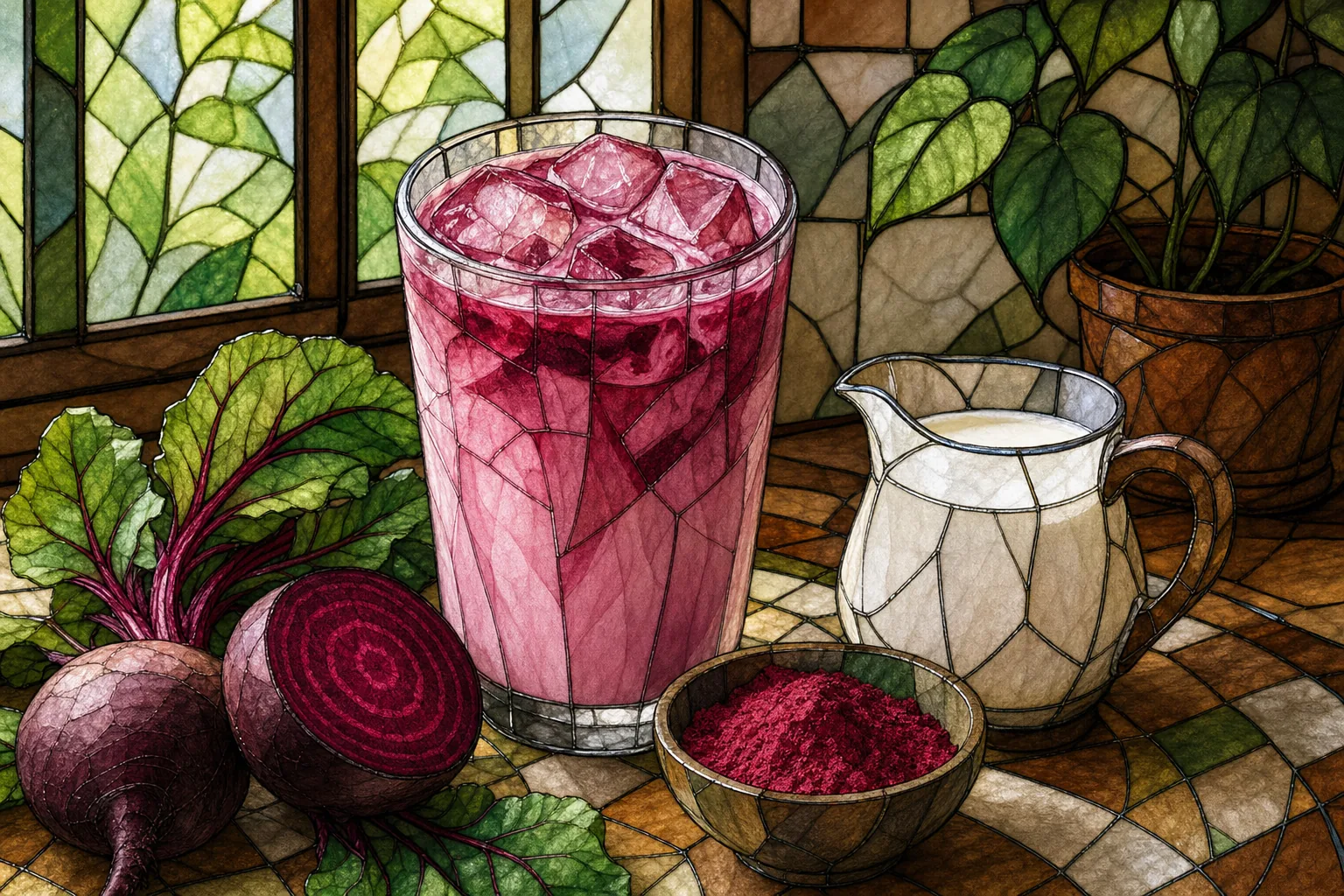
First, whisk the powder into a small amount of warm milk. Let the paste cool for a few minutes, then whisk in cold milk. Fill a glass with ice and pour the beetroot milk over it. Taste before sweetening. If you want honey, dissolve it in the warm paste before adding cold milk.
For a layered look, pour the beetroot milk slowly over ice. You can add espresso or strong coffee if you want caffeine, but that changes the drink from coffee-free to coffee-based. Stir the finished glass if you care more about even flavor than distinct layers.
Lavender ice cubes are another option. Use culinary lavender to make a lightly flavored infusion, freeze it in an ice tray, then add the cubes to the glass. As they melt, they can add a subtle floral note. Keep the lavender mild so it doesn’t overpower the drink.
If the powder clumps, make a thicker paste and whisk until smooth before adding more liquid. If the drink tastes too earthy, use less powder next time or add a touch of vanilla. If the color looks pale, add powder in small increments; the flavor can become stronger quickly.
A grainy texture can also come from powder that hasn’t mixed fully. A milk frother can help after you’ve made the paste. If sediment settles at the bottom while the glass sits, stir again before drinking.
When a cold drink tastes flat, a pinch of cinnamon or a little sweetener may help. Don’t add several strong flavors at once. Change one thing, taste, and keep the adjustment that works.
For more on possible concerns with regular beetroot use, see our notes on beetroot powder side effects and safety.
Step 6: Serve, Store Leftovers, and Keep the Routine Simple
Serve the latte soon after mixing. Powder can settle as the drink stands, so give it a stir if you pause between sips. If you’re making it for someone else, taste the sweetness first instead of assuming they’ll want syrup.
For leftovers, pour the drink into a clean, covered container and refrigerate it. Since the milk type and handling affect how long it keeps, use it promptly and follow the milk’s storage guidance. Stir well before drinking; separation can happen as it sits.
Beetroot adds color and plant compounds, but a latte isn’t a fixed nutrition formula. Its calories, sugar, and protein depend on the milk, sweetener, powder, and serving size you choose. Check each product’s label if you need a nutrition count. Without the exact amounts and labels, a precise macro breakdown would be guesswork.
Beets contain betalains, the pigments behind their red color, and other plant compounds. A latte shouldn’t replace medical care or prescribed treatment.
Some people choose beetroot drinks as part of an active routine. That doesn’t mean every powder or latte will have the same effect; products and serving amounts differ.
Beetroot can turn urine or stool reddish, which may be harmless, but don’t assume every color change has the same cause. People with a history of kidney stones or gout should ask a health professional whether beetroot fits their diet.
If you take medicine for blood pressure or have a health condition, check with a qualified health professional before adding a beetroot supplement to your routine. The AP Health Wellness Hub Red Superfood Powder is not for pregnant or nursing people or anyone under 18. Follow the label for the product you choose.
Keep the routine small enough to repeat. One mug on a day when you want a warm, coffee-free drink may suit you better than a complicated recipe with several add-ins. At AP Health Wellness Hub, we focus on simple wellness options that can fit into everyday routines.
FAQ
Does a beetroot powder latte have caffeine?
A beetroot latte made with beetroot powder and milk has no caffeine unless you add a caffeinated ingredient. Espresso, coffee, or some tea blends will add caffeine. Check the label if you’re using a premixed latte powder, since blends can contain ingredients beyond beetroot.
Can I make a beetroot latte without a milk frother?
Yes, you can make one without a frother. Whisk the powder with a small splash of milk until it forms a smooth paste, then add the rest of the milk. A fork works in a pinch. For foam, whisk briskly after combining the drink.
Which milk works best in a beetroot latte?
Use the milk you enjoy drinking. Dairy and oat milk can give a creamy result, while almond milk may feel lighter. Coconut milk can taste richer. The exact texture depends on the product, especially for plant-based milks, so try your usual carton first.
Can I drink a beetroot latte every day?
That depends on the product and your health needs. Follow the powder’s serving directions rather than assuming all products use the same amount. Ask a health professional before regular use if you’re pregnant or nursing, under 18, have a kidney stone history, or take blood pressure medicine.
Why is my beetroot latte gritty?
A gritty latte usually means the powder didn’t mix well or the drink sat long enough for some powder to settle. Make a smooth paste with a little warm milk before adding the rest. Whisk or froth the finished drink, then stir it again just before sipping.
Conclusion
Start with a small amount of powder, make a smooth paste, and choose milk you already like. For your next cup, try the hot version first; then adjust the sweetness or spices after tasting. AP Health Wellness Hub has red superfood options to explore as you build an easy everyday routine.