

Vitamin C Skin Benefits: Uses, Safety, and Results
Vitamin C can help brighten uneven tone, support collagen, and limit some damage linked to UV exposure. The best formula isn't always the strongest one: research also points to useful results from lower-dose creams with less irritation. Here's how vitamin C works, which form may suit you, and how to add it to a simple routine.
We searched PubMed, Europe PMC, and ClinicalTrials.gov today, using matched search terms for antioxidant support, brightening, collagen support, photoaging protection, and blemish-prone skin support. Antioxidant-related searches led every database: 1,942 PubMed records versus 451 for collagen, 216 for brightening, 115 for photoaging and 24 for blemish-prone skin. Europe PMC and ClinicalTrials.gov showed the same order, with antioxidant records at 18,025 and 49 against 13,565 and 34 for collagen support. Across all three databases, antioxidant support carried the largest published research volume of any vitamin C skin benefit.
What Is Vitamin C, and How Does It Work on Skin?
Vitamin C is a water-soluble antioxidant found naturally in the skin. An antioxidant helps neutralize unstable molecules called free radicals. These molecules can form after UV exposure, pollution, and normal body processes.
Topical vitamin C puts the ingredient close to the skin cells that need it. Oral vitamin C supports the body, but only a small part may reach the skin in an active form. That difference helps explain why skincare products often use vitamin C directly on the face.
The most studied form is L-ascorbic acid. It is the active form used in much of the clinical research on vitamin C skin benefits. It also has a drawback. L-ascorbic acid is unstable, dissolves in water, and has trouble passing through the skin's outer barrier.
Low pH can help. At a pH below 3.5, more L-ascorbic acid can move through the outer layer of skin. Yet a low-pH formula may sting, especially when your skin is dry or already irritated. A good product must balance strength, stability, and comfort.
Vitamin C can work through several paths. It can neutralize reactive oxygen species. It can support collagen-making enzymes. It can also slow melanin production, which is the process behind some dark spots.
Collagen gives skin much of its structure. Vitamin C acts as a helper for enzymes that stabilize collagen fibers. With steady use, that support may improve the look of fine lines and rough texture. It won't replace a medical treatment, and it won't erase deep wrinkles overnight.
Vitamin C may also affect AP-1, a signal involved in collagen breakdown after UV exposure. By limiting that signal in laboratory and clinical research, vitamin C may reduce some damage linked to photoaging. This is why many dermatologists pair it with sunscreen rather than treat it as a substitute for sunscreen.
The research has limits. Formulas differ in strength, pH, packaging, and added ingredients. Study results also vary by skin type and treatment length. A product that works well in a controlled study may behave differently on your bathroom shelf.
For a closer look at the chemistry and clinical uses, see this overview of topical vitamin C. It covers antioxidant action, collagen support, pigmentation, and photoaging.
The Main Vitamin C Skin Benefits
The main vitamin C skin benefits fall into four groups: antioxidant defense, brighter tone, collagen support, and added protection against photoaging. These effects overlap, so one routine may target more than one concern.
1. Antioxidant support
UV light and pollution can produce reactive oxygen species in the skin. These unstable molecules may damage proteins, lipids, and DNA. Vitamin C can donate electrons to help neutralize them before they cause as much harm.
This doesn't mean vitamin C shields your face like a sunscreen. It adds support after some exposure occurs. In research reviews, antioxidant and photoprotective actions make up a large share of the proposed benefits.
2. A brighter, more even look
Vitamin C may help fade the look of some dark spots by slowing tyrosinase activity. Tyrosinase is an enzyme involved in melanin production. Less melanin production in a targeted area may lead to a more even appearance over time.
Results depend on the cause of the discoloration. Sun spots, post-acne marks, and melasma don't behave the same way. Melasma can return with light exposure and may need care from a dermatologist. Vitamin C can support a plan, but it may not be enough by itself.
3. Collagen support and smoother texture
Collagen production slows with age and repeated UV exposure. Vitamin C supports enzymes involved in collagen formation. That can help the skin maintain its structure over time.
Visible changes are usually gradual. You may first notice a smoother feel or more even glow. Fine lines may look softer after several months of regular use, but results will be modest compared with procedures or prescription care.
4. Help against signs of photoaging
Photoaging means skin changes linked to repeated light exposure. Common signs include uneven tone, coarse texture, fine lines, and loss of firmness. Vitamin C may help reduce some of the oxidative stress behind these changes.
Its best partner is broad-spectrum sunscreen. Apply sunscreen every morning, even when you use an antioxidant serum. Sun-protective clothing and shade matter too, especially during long periods outdoors.
5. Support for blemish-prone skin
Some studies suggest topical vitamin C may help calm inflammation and improve the look of marks left after breakouts. The evidence is smaller than the evidence for antioxidant and collagen effects. A vitamin C product also may sting active acne if the skin barrier is weak.
Start with one active at a time. If you add vitamin C while also starting a retinoid or an exfoliating acid, you may not know which product caused redness.
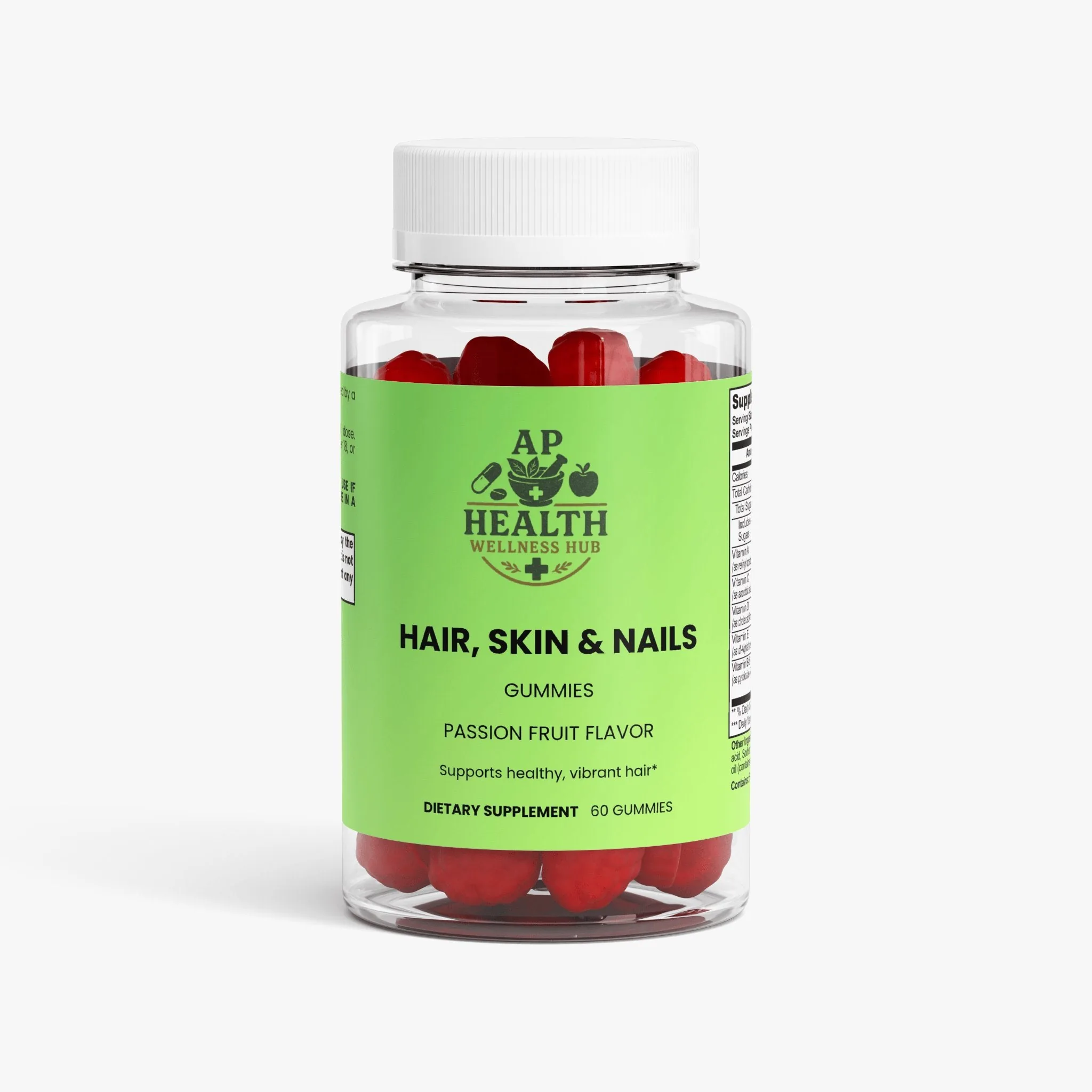
AP Health Wellness Hub focuses on simple wellness choices for everyday life. If you're also looking at nutrition, the hair, skin, and nails gummies combine biotin, collagen, vitamins A, C, and D, vitamin E, plus zinc. Take the label's directions as your guide, and remember that a supplement can't replace a balanced diet or medical care.
Vitamin C Forms: L-Ascorbic Acid vs. Derivatives
The form of vitamin C matters as much as the number on the front of the bottle. L-ascorbic acid has the strongest track record, while derivatives may provide better stability or comfort.
L-ascorbic acid
L-ascorbic acid is the form most closely studied in topical skincare. Common research ranges sit around 10% to 20%. A low-pH formula may improve penetration, but that same acidity can cause tingling, dryness, or redness.
Look for dark or opaque packaging when possible. Light and air can speed oxidation. A formula that turns noticeably dark orange or brown may have degraded. That color change doesn't tell you the exact strength, but it is a good reason to check the product's storage advice.
Vitamin C derivatives
Derivatives are altered forms of vitamin C. The skin may convert some of them into active vitamin C, though conversion and penetration vary. They often remain more stable at a near-neutral pH.
Examples include magnesium ascorbyl phosphate, sodium ascorbyl phosphate, ascorbyl glucoside, tetrahexyldecyl ascorbate, and ascorbyl tetraisopalmitate. These names can look alike, but they don't have identical research or skin feel.
Some newer reviews describe oil-soluble derivatives as useful for people who dislike acidic serums. Other derivatives may suit long-term brightening routines. The tradeoff is that some have less clinical data than L-ascorbic acid.
| Form | Common reason to choose it | Possible tradeoff | Best fit |
|---|---|---|---|
| L-ascorbic acid | Most studied topical form | Can sting and oxidize | Experienced users who want a well-studied option |
| Magnesium ascorbyl phosphate | Often used in gentler, near-neutral formulas | Results may vary by formula | People who find low-pH products uncomfortable |
| Sodium ascorbyl phosphate | May support tone and texture | Less direct evidence than L-ascorbic acid | People seeking a mild daily product |
| Ascorbyl glucoside | Often chosen for steady brightening care | Conversion to active vitamin C can vary | People who prefer a less acidic formula |
| Tetrahexyldecyl ascorbate | Oil-soluble and stable in many formulas | Product quality and evidence differ | Dry or sensitive skin that dislikes watery serums |
A 5% cream may support hydration and collagen activity with fewer irritation reports than stronger products.
This matters if your skin reacts easily. More is not always better. Concentrations above 20% may raise irritation without adding a clear benefit. A lower strength that you use often can beat a stronger product that sits unused in a drawer.
How to Add Vitamin C to a Skincare Routine
The easiest way to use vitamin C is to place it in your morning routine. Clean skin gives the product a clear path, while sunscreen adds the main layer of UV protection.
Start with a small amount
Wash your face with a mild cleanser. Pat dry, then apply a small amount of vitamin C serum or cream. Follow with moisturizer if you need it. Finish with broad-spectrum sunscreen.
If your skin is sensitive, use the product every other morning at first. Give your skin time to adjust. Daily use can follow if you have no ongoing burning, swelling, rash, or marked redness.
Keep the routine simple
Don't add several strong products on the same day. Vitamin C can be used with moisturizer and sunscreen. If you use retinol, benzoyl peroxide, or an exfoliating acid, consider using them at a different time until you know how your skin responds.
This approach makes problems easier to trace. If your face becomes dry after adding three new products, you won't know which one caused it. One change at a time gives you a cleaner answer.
Patch test when needed
Apply a small amount to an area near the jaw or behind the ear. Watch the area for a day or two before using the product across your face. A patch test can't predict every reaction, but it can help you spot a clear sensitivity.
Store it with care
Keep the product closed and follow the label's storage instructions. Heat, light, and air can reduce stability. Don't leave a serum on a sunny windowsill or beside a hot shower.
Check the color and smell each time you use it. A change may mean the formula has oxidized. When in doubt, replace it instead of trying to rescue an unstable product.
AP Health Wellness Hub is built around easy, simple routines for busy people. Alongside skincare, our gentle balancing toner is described for sensitive or blemish-prone skin. Use any toner only if your skin tolerates it, and don't assume that adding more steps will produce faster results.

Who May Benefit, Possible Side Effects, and Realistic Results
Vitamin C may suit adults who want help with uneven tone, early fine lines, rough texture, or daily antioxidant support. It may also fit people who want a morning active without using a retinoid.
Skin type still matters. Oily skin may prefer a light serum. Dry skin may feel better with a cream or a formula that includes moisturizing ingredients. Sensitive skin may do better with a derivative or a lower concentration.
Possible side effects
The most common problems are stinging, itch, dryness, tightness, and redness. These effects are more likely with acidic formulas or high concentrations. A little tingling can happen, but strong burning is a stop signal.
Stop using the product if you develop substantial discomfort, swelling, hives, blistering, or a rash that keeps spreading. Seek medical help for a severe reaction. If you have eczema, rosacea, a known allergy, or a damaged skin barrier, ask a clinician before adding a strong active.
Don't use vitamin C on skin that is freshly sunburned, cracked, or raw. Let the barrier recover first. A plain moisturizer and sun protection may be the better short-term plan.
How long do results take?
Brightening may take several weeks. Fine-line and texture changes often take longer. Clinical guidance commonly points to about three months of consistent use before judging a product's visible effect.
Take a photo in the same room once every four weeks. Use similar light and keep your face relaxed. Daily mirror checks make small changes hard to see, while a monthly photo gives you a fairer comparison.
Don't expect a facelift effect from an over-the-counter cream or serum. These products may make small improvements, and moisturizer alone can temporarily plump the skin so lines look softer. The final result depends on the active form, concentration, formula, routine, and your skin's baseline condition.
That doesn't prove a claim is false, but it does mean you should be cautious with dramatic promises.
Vitamin C also doesn't replace sunscreen. It can support the skin's defenses, but it cannot block all UV exposure. Use shade, protective clothing, and broad-spectrum sunscreen when you're outside.
For readers building a broader wellness routine, AP Health Wellness Hub keeps the focus on affordable, everyday options rather than complex plans. Choose one product that matches your main goal, use it steadily, and give your skin enough time to respond.
FAQ: Vitamin C Skin Benefits
What are the main vitamin C skin benefits?
The main benefits include antioxidant support, brighter-looking skin, collagen support, and help with the appearance of some dark spots. Vitamin C may also support a smoother texture over time. Results vary by formula and skin type, so steady use matters more than choosing the highest concentration.
Is vitamin C good for your face every day?
Vitamin C can be used every day if your skin tolerates it. Start every other morning, then increase use if you have no lasting redness or discomfort. Apply it after cleansing and before moisturizer and sunscreen. Sensitive skin may need a lower strength or a gentler derivative.
What percentage of vitamin C is best for skin?
A common research range is 10% to 20% L-ascorbic acid, but a 5% cream may still support hydration and collagen activity. Higher strength can cause more irritation, and concentrations above 20% may not add clear value. The best choice is one you can use consistently.
Can vitamin C remove dark spots?
Vitamin C may lighten the appearance of some dark spots by slowing melanin production. It won't remove every kind of discoloration, and melasma may need professional care. Daily sunscreen is essential because UV exposure can keep dark spots active and reduce the value of a brightening routine.
Can I use vitamin C with retinol?
You can often use vitamin C and retinol in the same overall routine, but separating them may reduce irritation. Try vitamin C in the morning and retinol at night. Add one product at a time. If your skin burns, peels, or stays red, pause the actives and focus on barrier care.
Does vitamin C replace sunscreen?
Vitamin C does not replace sunscreen. It may add antioxidant support, but sunscreen remains the main topical step for reducing UV exposure. Apply a broad-spectrum sunscreen each morning and reapply as directed when you spend time outdoors.
Conclusion
Choose a stable vitamin C formula that matches your skin's tolerance, then use it consistently in the morning with sunscreen. If you're new to the ingredient, start with a lower strength and one simple product. AP Health Wellness Hub can help you keep the rest of your wellness routine easy, but persistent irritation or stubborn pigmentation deserves advice from a qualified clinician.