

Best Probiotics for Bloating: Top Picks That Work
Not every probiotic calms a bloated belly. Research shows that only specific strains consistently reduce bloating, while many multi-strain products deliver mixed or no benefit at all. We put together this shortlist to cut through the noise, featuring products from AP Health Wellness Hub that address the real causes of digestive discomfort, from bacterial imbalance to low stomach acid to a depleted post-antibiotic gut.
1. AP Health Wellness Hub Probiotic 40 Billion with Prebiotics , Our Top Pick for Daily Bloating Relief
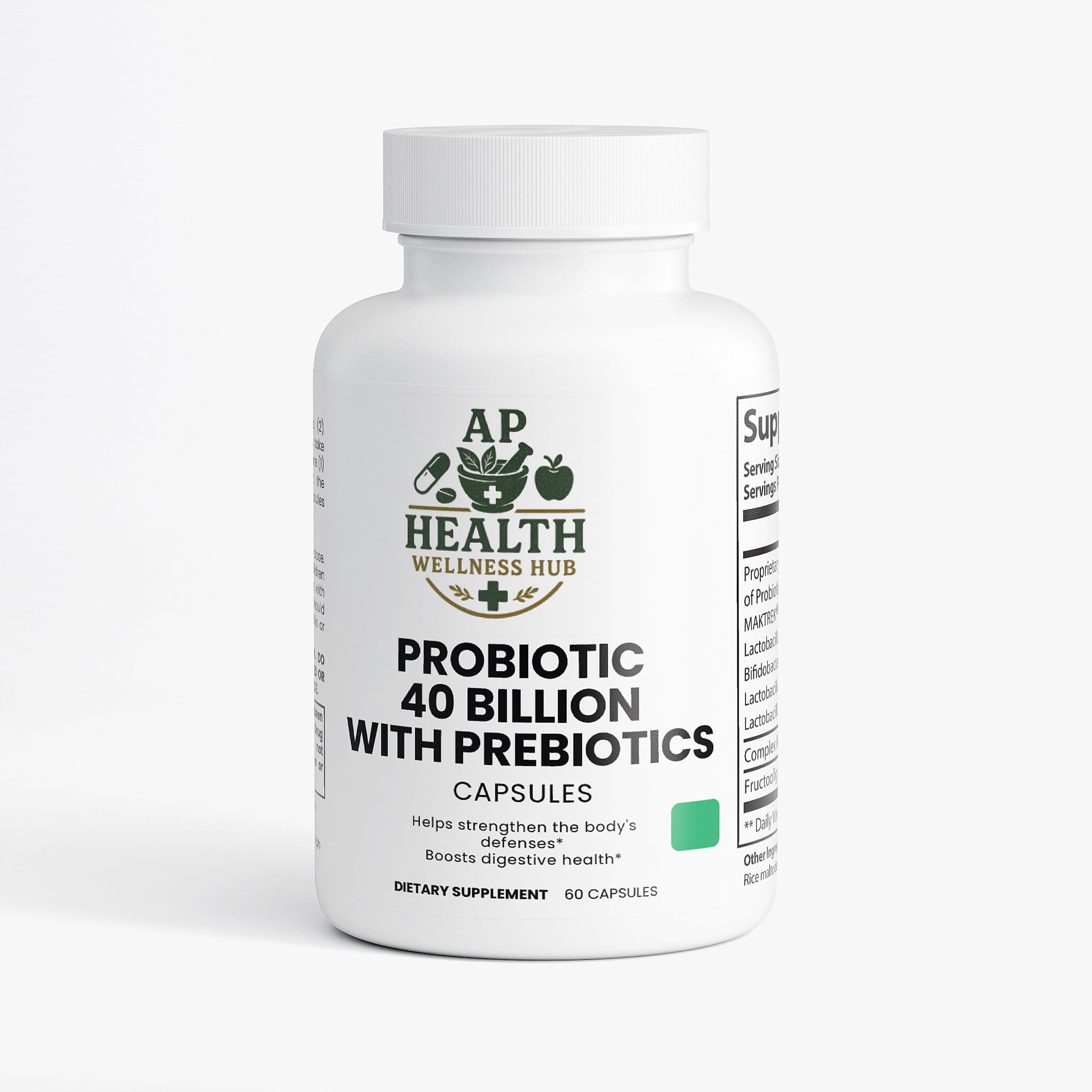
This is our top pick for daily bloating support, and it earns that spot for a clear reason: four well-studied strains in a single formula. The Probiotic 40 Billion with Prebiotics contains Lactobacillus Acidophilus, Bifidobacterium Lactis, Lactobacillus Plantarum, and Lactobacillus Paracasei.
Why does that strain list matter? Research has found that in a probiotic group, 41.90% of participants reported no bloating symptoms versus roughly 12% in control groups. Strain-specific evidence points to L. Plantarum as one of the most effective organisms for reducing abdominal distension scores.
At 40 billion CFUs per serving, the dose sits well above the five-billion minimum that practitioners typically recommend for clinical effect. The formula also includes prebiotics, which is important: probiotics need prebiotic fiber to survive and flourish in the gut. Without it, even a high-CFU supplement can pass through without colonizing properly.
One honest caveat: if you're currently eating a diet heavy in refined carbs or sugar, the good bacteria face an uphill battle regardless of CFU count. Pairing this supplement with even small dietary shifts, like adding garlic, leeks, or bananas, gives the strains a better environment to work in.
If you're new to gut health supplements and want a broader overview before choosing, the Beginner's Guide to Wellness Supplements for Digestion and Bloating walks through what causes bloating, common supplement types, and how to choose safe, simple options. At $30.90, this is one of the most affordable high-CFU formulas available for consistent, daily use.
2. AG1 Next Gen, Targeted Digestive Support Formula
AG1 Next Gen is built for people whose bloating has a more complex root, think sluggish digestion, enzyme gaps, or a microbiome that needs more than just bacteria replenishment. Its formula includes probiotics that help alleviate bloating and other intestinal symptoms.
Here's what's useful to understand about how bloating actually starts. When food isn't broken down efficiently in the stomach and small intestine, partially digested particles reach the large intestine where bacteria ferment them. That fermentation produces gas. When bad bacteria outnumber good ones, food ferments where it shouldn't, and gas builds up.
A targeted digestive support formula addresses this at multiple points in the process. Rather than simply adding bacteria count, it works to restore the conditions that make healthy digestion possible in the first place.
One thing worth knowing: some gut health supplements contain prebiotic fibers like inulin, which can temporarily cause gas in sensitive individuals. If you find your bloating worsens in the first few days, that's often the supplement doing its job, not a reason to stop. Start with a smaller portion of the recommended dose and increase over one to two weeks.
This formula makes the most sense for adults who've already tried a basic probiotic without lasting relief. It's the logical next step when you want a more thorough approach to digestive support.
3. AP Health Wellness Hub Apple Cider Vinegar Capsules , Low-Stomach-Acid Bloating Support
Not all bloating comes from a bacterial imbalance. Some people bloat because their stomach acid is too low to break down proteins fully, which means food sits too long and bacteria get to work on it prematurely. This is where apple cider vinegar (ACV) enters the picture.
The Apple Cider Vinegar Capsules ($29.99) put the benefits of ACV in a convenient form without the harsh acidity of drinking raw vinegar, which can irritate tooth enamel and, in rare cases involving prolonged direct contact, the esophagus. Capsules bypass those concerns entirely.
It's worth being straightforward about the evidence here. As Healthline notes, there's currently no clinical trial confirming ACV resolves bloating. The theoretical benefit for low-stomach-acid bloating is plausible because ACV may help increase stomach acidity and has some antimicrobial properties. But people with gastroparesis or delayed gastric emptying should avoid it, as one small study found it slowed stomach emptying further.
For people who suspect low stomach acid is behind their post-meal puffiness, these capsules are a usable, low-cost starting point. Dr. Berg's work on gut health also highlights ACV's role in waking up dormant gut microbes by shifting the gut toward a more acidic environment, supporting the broader microbial ecosystem.
The capsule format also means you get ACV with "the mother" (the live bacterial culture) in a standardized dose, which removes the guesswork of diluting liquid vinegar at home. Talk to your doctor if your symptoms are persistent before relying on this as a sole solution.
4. AP Health Wellness Hub Max Detox (Acai Detox) , Reset Your Gut Microbiome After Antibiotics
If you've taken antibiotics recently and your digestion hasn't felt the same since, this product addresses exactly that problem. Antibiotics wipe out far more than the bad bacteria they're prescribed for. Research shows broad-spectrum antibiotics can eliminate 50 to 99% of certain beneficial microbial strains, and that diversity doesn't simply bounce back within weeks despite what's commonly assumed.
The Max Detox (Acai Detox) ($29.90) combines a cleansing approach with natural ingredients to support gut recovery. Acai is rich in antioxidants and fiber, which feeds beneficial bacteria and helps clear byproducts of digestive imbalance.
This is also relevant for anyone who's been exposed to antibiotics indirectly. Glyphosate (a common agricultural herbicide) has been patented as an antibiotic because it kills microbes. Other common exposures include steroids, birth control pills, and even artificial sweeteners, all of which can alter gut microbiome composition in ways that mirror antibiotic damage.
Think of Max Detox as a reset, not a cure. Used after a course of antibiotics or after a period of poor diet, it helps clear the gut environment and set up conditions where a follow-up probiotic supplement can actually stick. Pairing it with Probiotic 40 Billion in the weeks following a detox cycle gives the new bacterial strains a cleaner environment to colonize.
At $29.90, it's one of the more affordable options in the lineup, and the approach makes clinical sense given what we know about how antibiotics reshape the microbiome over the long term.
5. AP Health Wellness Hub Fermented Mushroom Blend , Probiotic-Rich Whole-Food Support

The Fermented Mushroom Blend ($51.90) takes a whole-food approach to digestive support. Fermentation is the key word here. The process of fermenting mushrooms produces beneficial microbial byproducts and makes nutrients more bioavailable, similar to how fermented vegetables like kimchi or sauerkraut deliver live cultures alongside their base nutrition.
Mushrooms also contain beta-glucans, a type of soluble fiber that acts as a prebiotic. This feeds the beneficial bacteria already present in your gut, which helps maintain the microbial diversity that keeps bloating at bay. The gut microbiome needs variety to function well, and whole-food sources provide a broader spectrum of compounds than isolated probiotic strains can on their own.
This product suits people who prefer getting gut support from food-based sources rather than isolated bacterial supplements. It also layers well alongside Probiotic 40 Billion if you want to cover both the bacterial replenishment angle and the prebiotic feeding angle simultaneously.
One limitation: if your bloating is tied to a specific bacterial imbalance or a clinical condition like IBS, a fermented mushroom blend alone is unlikely to provide sufficient targeted relief. It's best used as part of a broader gut health routine rather than as a standalone fix for acute symptoms. That said, as a daily maintenance product for general digestive wellness, it's a genuinely useful addition to the rotation.
6. AP Health Wellness Hub Greens Superfood , Prebiotic Fiber That Fuels Your Probiotic Strains
Probiotics need fuel. Without adequate prebiotic fiber in your diet, even high-quality bacterial strains struggle to survive and multiply in the colon. The Greens Superfood ($55.90) addresses this gap directly.
Greens powders pack concentrated plant fiber from sources like spirulina, wheatgrass, and leafy green extracts. These fibers are what beneficial bacteria feed on, producing short-chain fatty acids in the process that reduce gut inflammation and help regulate bowel motility. When motility is off, food moves too slowly, fermentation builds up in the wrong places, and bloating follows.
Think of it this way: if you start a probiotic but keep eating a low-fiber diet high in refined carbs, you're essentially buying good bacteria and then starving them. The Greens Superfood solves the supply side of that equation, giving your gut flora the material they need to thrive.
It's also worth noting that lifestyle factors compound digestive issues. Chronic stress, poor sleep, and high sugar intake all disrupt the gut microbiome by raising levels of harmful bacteria and reducing beneficial ones. A daily greens blend can't undo a high-stress lifestyle on its own, but it's one of the simplest ways to consistently raise your fiber intake without overhauling your entire diet.
How to Choose the Right Probiotic for Bloating: Label-Reading Tips and Strain Guide
Walking into a supplement aisle (or scrolling through an online store) without a framework is how people end up buying products that don't help them. Here's what to actually look at.
CFU Count
Look for at least five billion CFUs per serving. Products below that threshold often don't deliver enough live bacteria to meaningfully alter the gut environment. Our Probiotic 40 Billion sits well above this baseline.
Strain Specificity
Research covering probiotics and IBS indicates that strains like Lactobacillus Plantarum and Bifidobacterium species have documented effects on bloating and abdominal distension. A label that says "probiotic blend" with no named strains tells you very little. Named strains with species and subspecies listed (L. Plantarum, B. Lactis) are more reliable.
Enteric Coating or Delayed Release
Stomach acid kills many bacteria before they reach the colon. Enteric-coated capsules or delayed-release formulations survive the acidic stomach environment and deliver bacteria where they're needed. Check the label for this feature, especially if you've tried probiotics before without noticeable results.
Prebiotic Inclusion (With a Caveat)
Prebiotics in a formula help the bacteria survive and colonize. But some prebiotic fibers, particularly inulin, cause gas in sensitive people. If you know you react to inulin, look for a formula without it, or start with a very low dose and build up slowly over two weeks.
Storage Instructions
Some probiotics require refrigeration to maintain potency. Others are shelf-stable. Check the label and follow the storage instructions precisely. A probiotic stored incorrectly may have far fewer live organisms than the CFU count on the label suggests by the time you use it.
One broader point: probiotics are most effective when paired with consistent habits. Regular sleep, reduced refined-carb intake, and some daily movement all influence gut microbiome health, sometimes more than any single supplement. Stress raises levels of harmful bacteria and lowers beneficial ones, so managing chronic stress is part of the picture. If lower back tension or postural issues are adding to your stress load, resources from qualified physical health providers offer usable physical relief that can complement your gut health routine.
Frequently Asked Questions
How long do probiotics take to help with bloating?
Most people notice some change within one to four weeks of consistent daily use. Strain-specific probiotics for IBS-related bloating tend to show measurable results in two to four weeks based on clinical trial data. If you see no improvement after four weeks, the strain or dose may not match your specific gut environment, and it's worth trying a different formula or talking to a doctor.
Can probiotics make bloating worse before it gets better?
Yes, temporarily. When you introduce new bacteria into a gut that's out of balance, some initial gas or bloating is normal as the bacterial populations shift. This usually settles within one to two weeks. If symptoms are severe or persist beyond two weeks, reduce your dose or check whether the formula contains prebiotic fibers like inulin that you may be sensitive to.
What are the best probiotic strains specifically for bloating?
Lactobacillus Plantarum and Bifidobacterium species (particularly B. infantis and B. breve) have the strongest documented evidence for reducing abdominal distension and gas. A meta-analysis of 23 randomized controlled trials found probiotics reduced persistent bloating risk by 21% in IBS patients. Look for these strains specifically named on the label rather than generic multi-strain blends.
Should I take a probiotic with food or on an empty stomach?
Most practitioners recommend taking probiotics with a meal or just before eating. Food buffers stomach acid, giving the bacteria a better chance of surviving the transit to the colon. The specific timing matters less than consistency. Taking your probiotic at the same time each day, whether morning or evening, makes it easier to build the habit.
Do I need a probiotic after taking antibiotics?
Taking a probiotic during and after a course of antibiotics is widely recommended because antibiotics kill beneficial gut bacteria alongside harmful ones. Some microbial diversity may not fully recover without intervention. Start a probiotic on the same day you begin antibiotics (take them a few hours apart) and continue for at least two to four weeks after finishing the course.
Are there any people who shouldn't take probiotics for bloating?
People with severely compromised immune systems, those undergoing chemotherapy, or individuals with certain serious conditions like short bowel syndrome should avoid probiotic supplements unless specifically directed by a doctor. For otherwise healthy adults, probiotics are generally safe. Mild side effects like temporary gas are common at the start but rarely a reason to stop.
Wrapping Up
If you're dealing with daily bloating and want to address it with a supplement that's grounded in strain-specific research, start with the AP Health Wellness Hub Probiotic 40 Billion with Prebiotics. It's the most direct match between documented effective strains and an affordable daily formula. If your symptoms run deeper or followed a course of antibiotics, layer in Max Detox first, then add Greens Superfood to keep the bacterial environment well-fed. Browse the full digestive support range at AP Health Wellness Hub and pick the option that fits where you are right now.